
JARVIS: agents that have to prove it.
A command centre for running a team of AI agents, where nothing counts as done until it is checked.
Problem
An AI agent will report work as finished when it isn't, and one session can't hold every project's context. I needed agents I could hand work to without re-checking everything by hand.
Build
01 Request
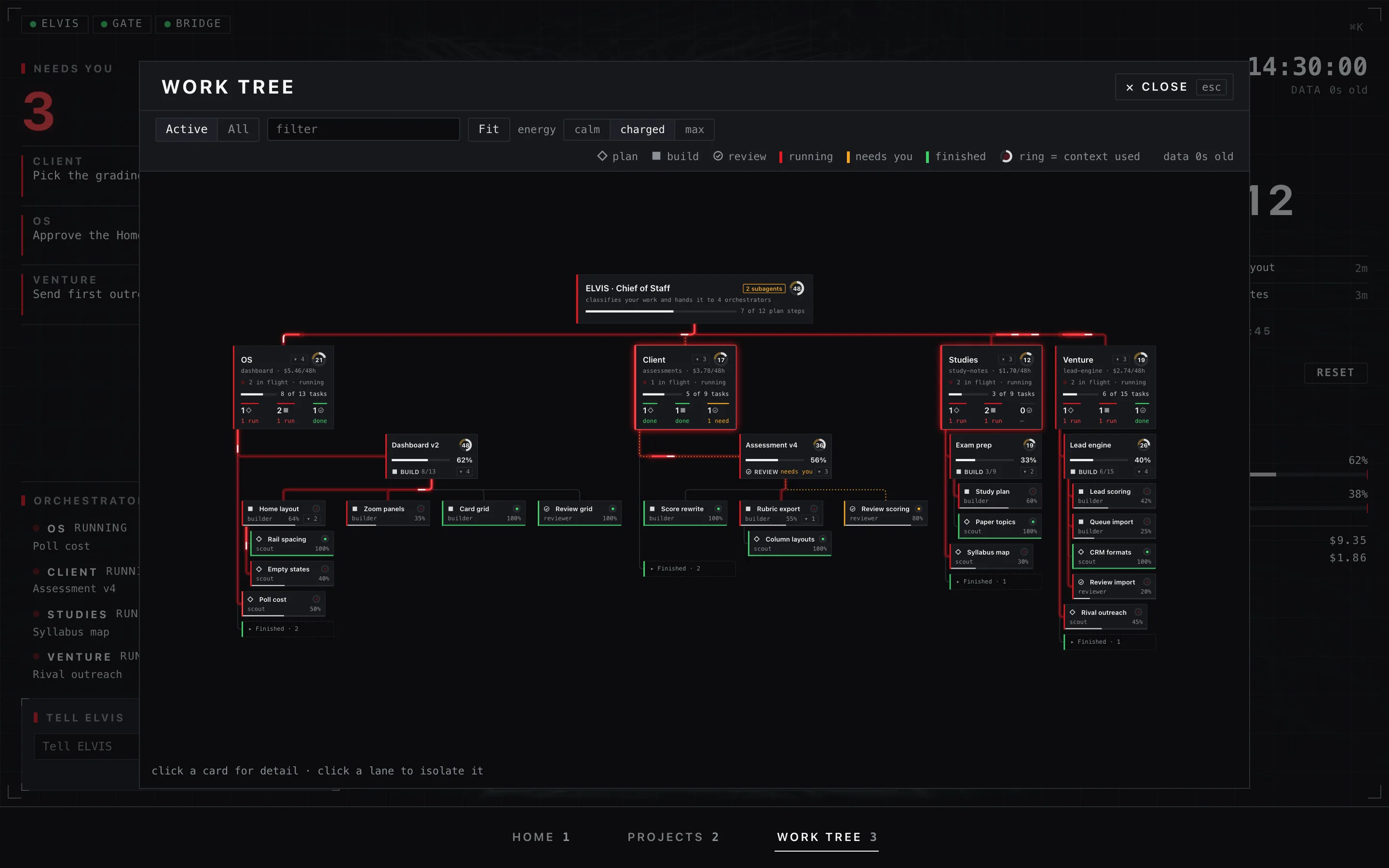
Work enters through one chief orchestrator, which routes it to one of four lanes: client work, OS, school and venture. Each lane has its own orchestrator and state file.
02 Contract
Before an agent starts, its orchestrator writes a contract: the task, the deliverable, a mechanical done-when, what not to assume and which files it may read. A gate refuses an incomplete contract.
03 Agent
Scouts read, builders write code and tests, reviewers check. Each touches only the files its contract names.
04 Receipt
Every agent returns a receipt, and the gate refuses one that overclaims.
05 Check
The orchestrator re-runs the check itself instead of trusting the agent's summary.
06 Handoff
Near 150k tokens of context, an orchestrator is designed to hand off: it writes a short delta, and a fresh session claims the lane and starts from its state.
The page
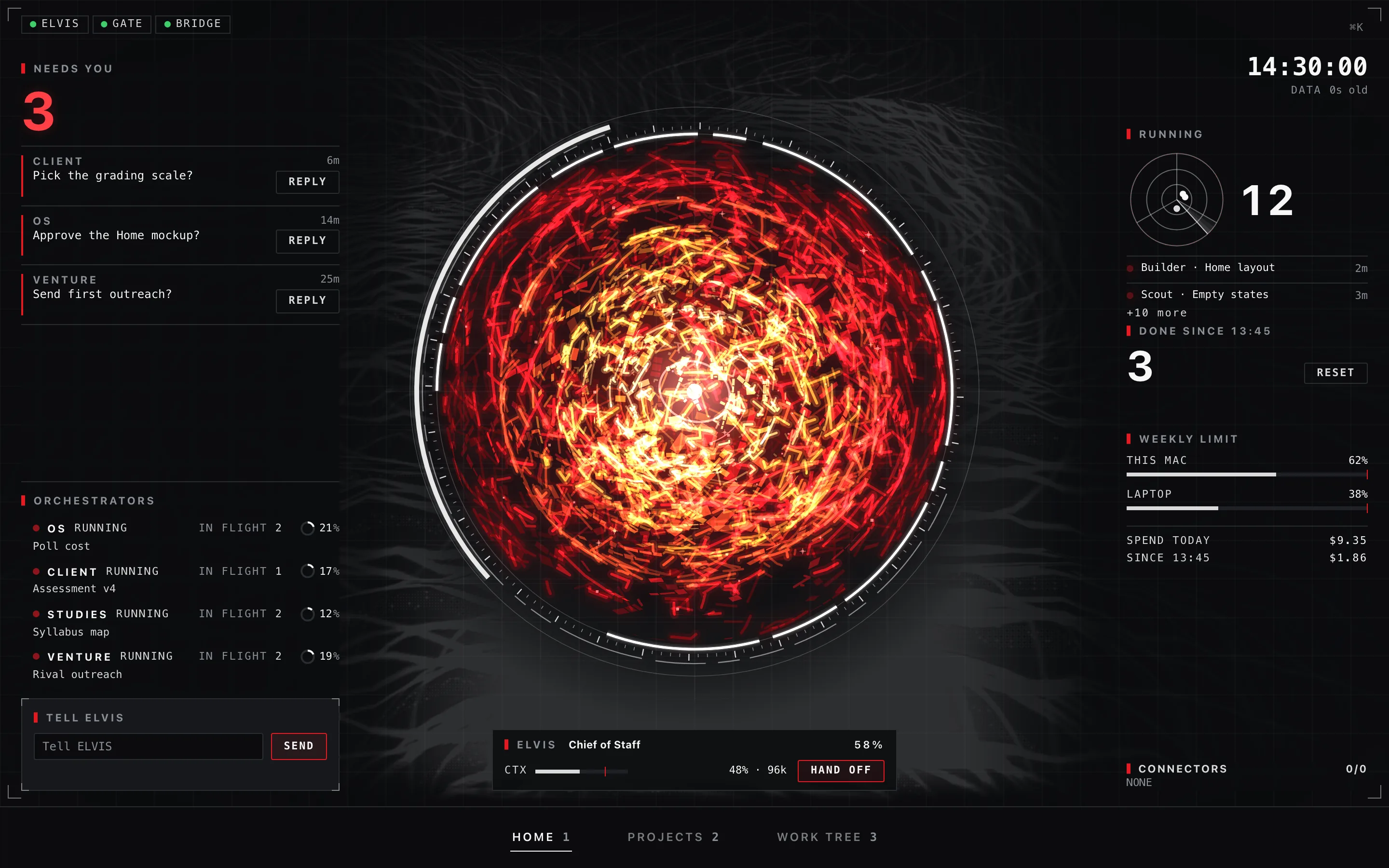
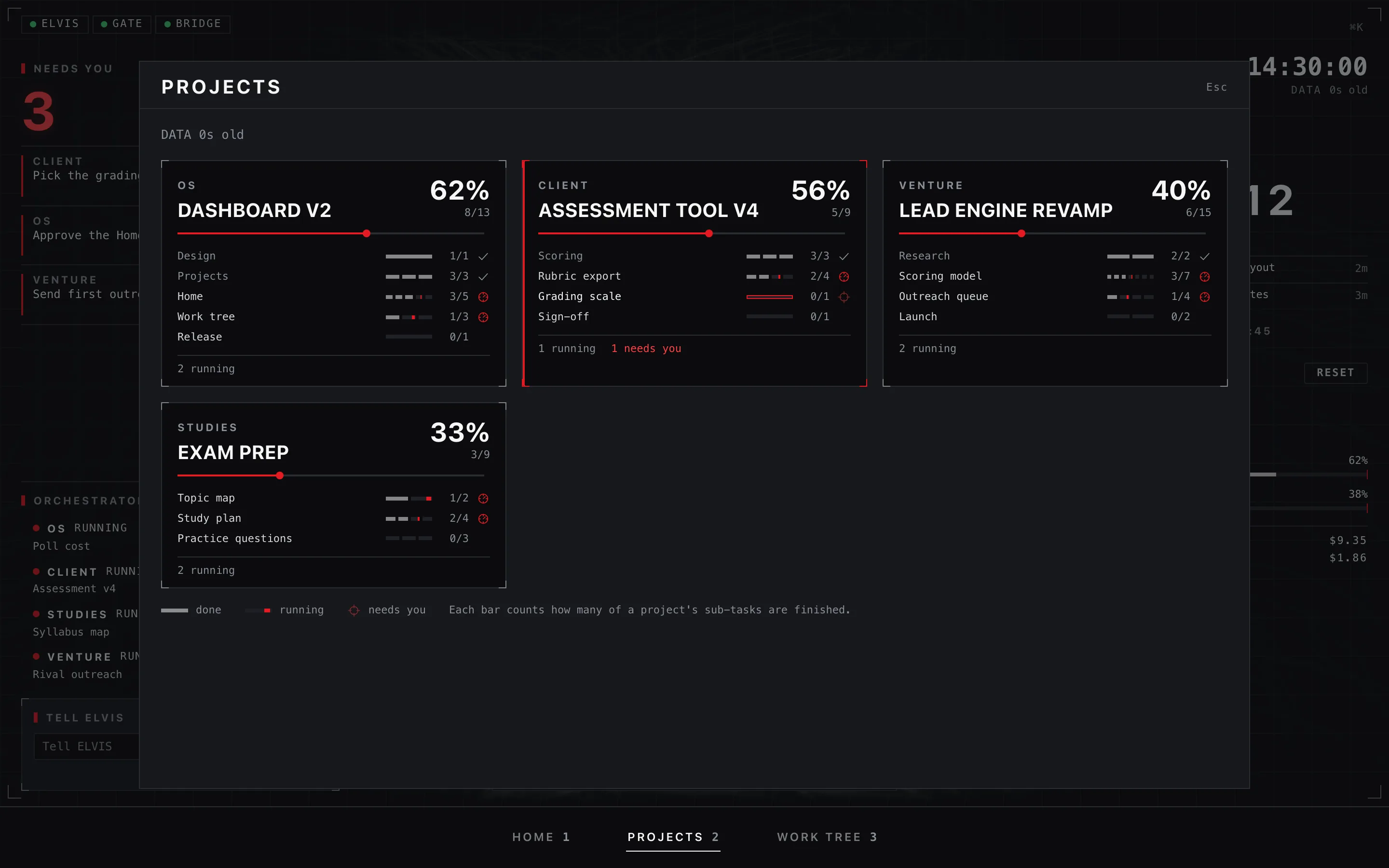
JARVIS is the window onto all of it: a local page that shows what is running, what needs me, every contract with its receipt, and the spend. It uses the Python standard library only and binds to 127.0.0.1, so nothing leaves the Mac.
Results
The receipts sit in four ledgers, one per lane. My rulings are logged word for word, so a fresh session inherits decisions instead of asking again.